

A beautiful table begins with the material beneath the glaze. Some pieces feel reassuringly substantial; others are almost luminous in the hand. This guide explains the tableware materials you are most likely to encounter, how they differ, and how to choose pieces that fit the way you eat and entertain.
One useful starting point: ceramic is the broad family. Earthenware, stoneware and porcelain are different ceramic bodies. Traditional bone china is a particular fine ceramic; “New Bone China” is a product label that should be read on its own terms.
At a glance: which material feels right for your table?
- Stoneware: weighty, tactile and relaxed; an easy choice for everyday plates and bowls.
- Porcelain: refined, dense and often bright white; equally at home at a weekday lunch or a dressed table.
- Bone china: traditionally made with bone ash, prized for a light feel and gentle translucency.
- Earthenware and terracotta: expressive clay character; check the glaze and the individual piece’s food-use and care guidance.
- Glass: clear, versatile and ideal for drinks and serving.
Stoneware: quiet texture for everyday rituals
Stoneware is fired to a dense, low-porosity body. It often has a grounded feel and takes beautifully to matte glazes, soft neutrals and organic shapes. Its visual warmth makes a simple bowl of fruit, soup or pasta feel considered without making the table formal.
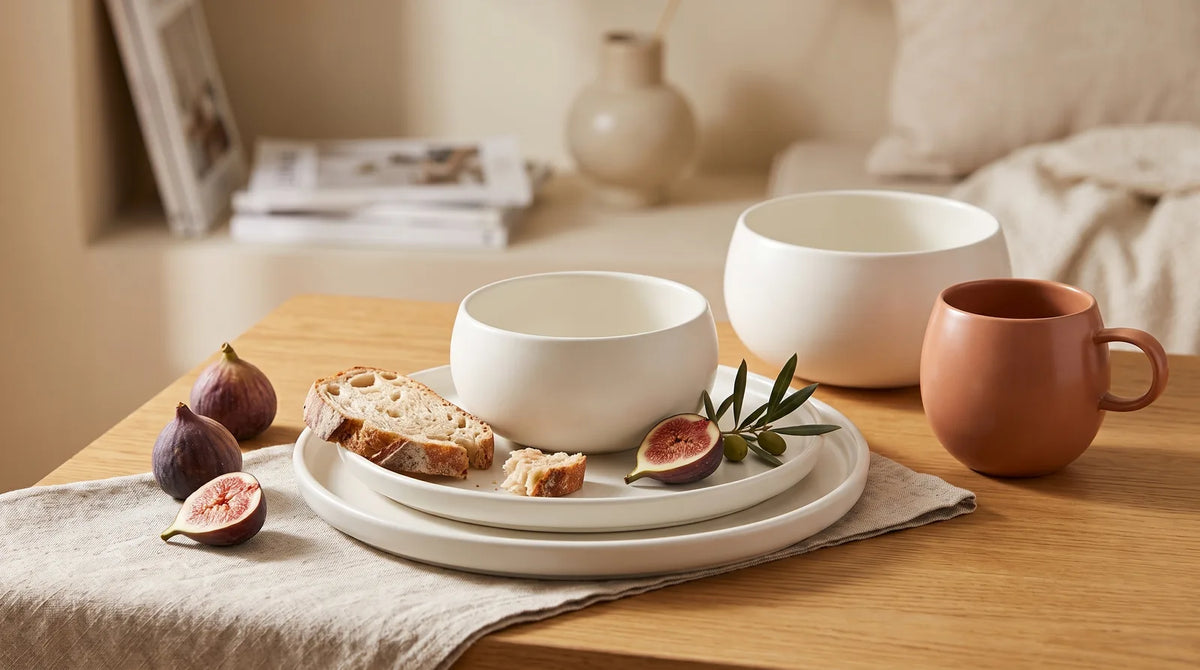
An everyday table in warm, earthy tones. Styling photography illustrates the mood; always check an individual product listing for its material.
Discover the look: Luhpar’s Calma Ivory Bowl, 600 ml is listed as premium stoneware with a solid matte finish. Browse the Everyday Dining collection for pieces to layer around it.
Porcelain: refined, strong and beautifully versatile
Porcelain is made from a fine clay blend and fired until the body becomes dense and nonporous. Thin porcelain can look delicate and even slightly translucent, yet a well-made piece is designed for regular use. It is a natural canvas for crisp white settings, painted florals and fine detailing.
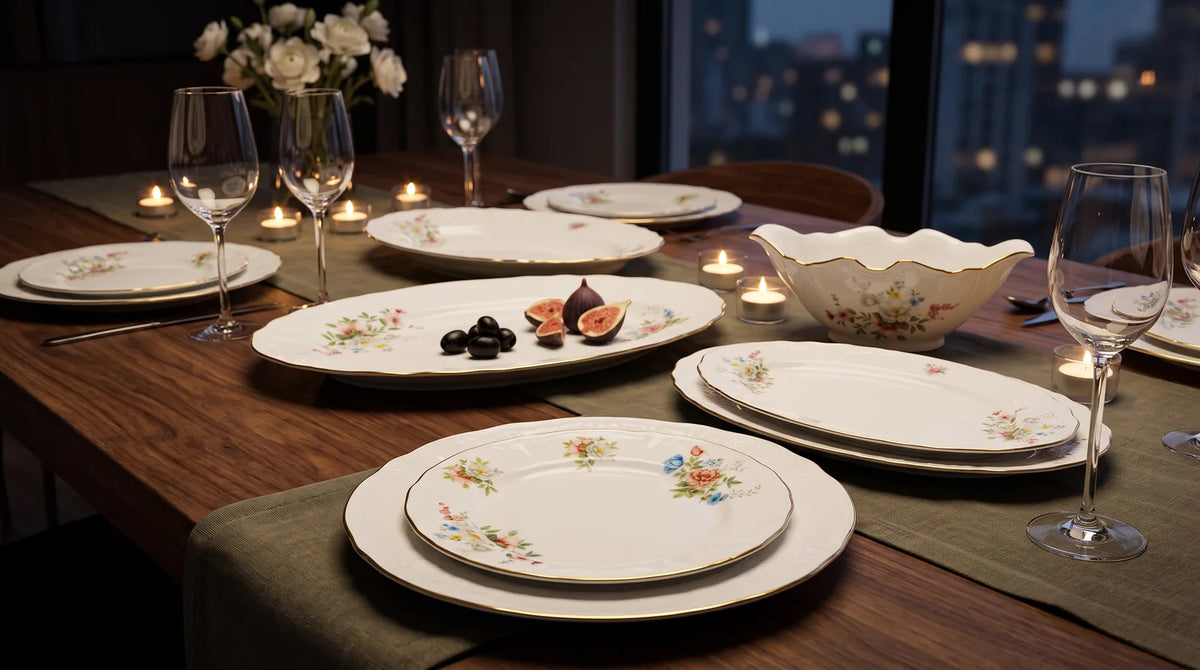
Classic Garden brings delicate florals and a fine gold rim to an evening setting.
Discover the look: Explore Luhpar’s Classic Garden collection or start with the Classic Garden 6.5-inch Salad Bowl, listed as premium porcelain. Its gold rim calls for the care stated on the product page; hand washing is recommended.
Bone china and “New Bone China”: read the label closely
Traditional bone china combines a fine ceramic body with bone ash. It is associated with a light feel, a smooth finish and a softly translucent appearance. The words New Bone China appear on some contemporary tableware, but the name alone does not tell you that a piece has the same composition as traditional bone china. If ingredients matter to you, check the maker’s specific material information.
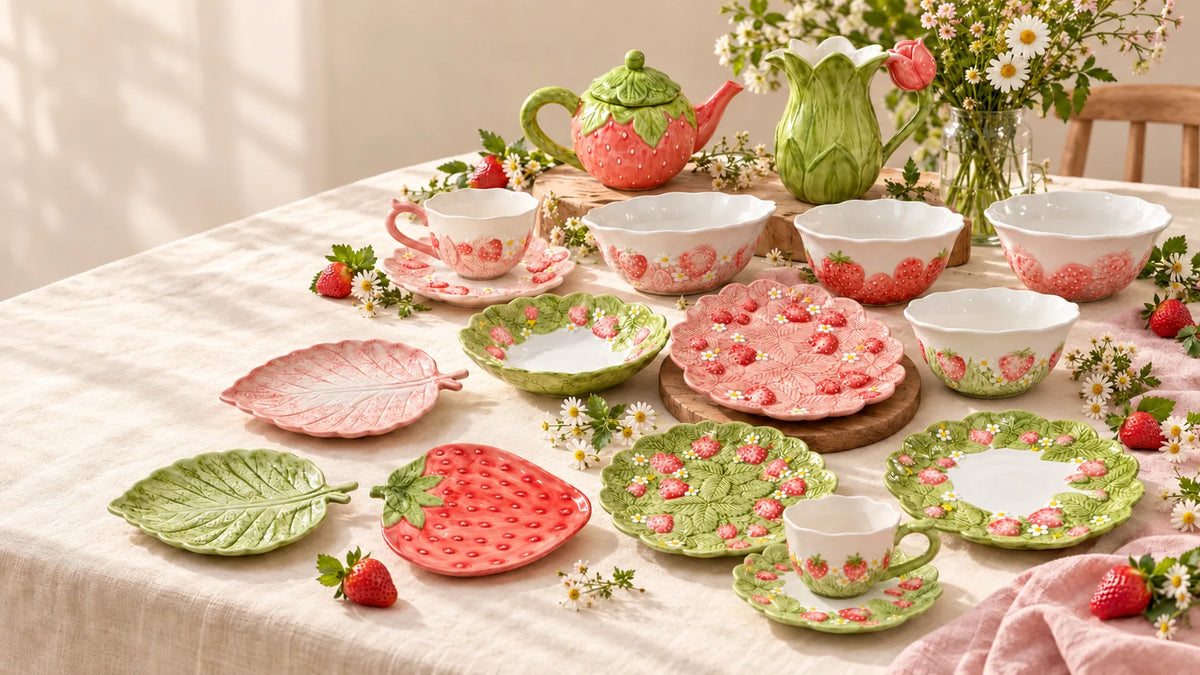
Berry Bloom’s sculpted fruit and floral details show how a fine ceramic can still feel playful.
Discover the look: The Berry Bloom collection is presented by Luhpar as New Bone China. Try the Strawberry & Blossom Dinner Plate as a statement layer.
Earthenware and terracotta: the warmth of clay
Earthenware is generally fired at a lower temperature than stoneware or porcelain, leaving a more porous body. A food-safe glaze and intended serving use matter, so check the individual piece before using it for food. Terracotta is a type of earthenware recognised for its natural red-brown clay colour. Its warmth can be wonderful on and around a table, from serving forms made for food to decorative accents.
A useful distinction: a terracotta vase is a beautiful styling object, not automatically a vessel for food or drink. For that earthy note, see Luhpar’s terracotta amphora-style vase. For glazed, hand-painted clay designed for serving, explore the Medina collection, including its 8 cm ceramic tagine. Medina is described as glazed white-clay ceramic; its listing does not identify it as earthenware.
Beyond clay: glass brings light to the setting
Glass offers a different kind of beauty: transparency, colour and sparkle. It gives a table visual breathing room beside patterned ceramics and works especially well for water, juice and shared drinks. The Luhpar Green and Amber Handle Glass Jug is one way to add that contrast.
How to choose—and care for—the pieces you love
- Choose by use: start with the meals you serve most often, then decide whether you want stoneware’s grounded feel, porcelain’s refinement or an expressive glazed clay accent.
- Mix by colour, not by material alone: a common ivory, blue or earthy tone can bring different ceramics together naturally.
- Check each product’s care instructions: dishwasher, microwave and oven suitability depend on the individual body, glaze and decoration. Never assume a decorative piece is food safe.
- Handle temperature changes gently: allow hot pieces to cool before placing them in cold water, and protect decorated rims from abrasion.
Build your own material mix. Begin with a versatile base from Everyday Dining, add a porcelain accent from Classic Garden, then bring in colour with Berry Bloom. The most memorable table is the one that feels like yours.
For a deeper look at ceramic bodies and traditional bone china, read the American Ceramic Society and Wedgwood’s bone china guide.